
London Business School Hosts 23rd Annual MENA Conference Convening Regional Leaders and Global Experts
The event brought together policymakers, investors, founders, and industry leaders to discuss the region’s evolving economic landscape.
PRESS RELEASE
ME-HR & Learning
5/25/20263 min read
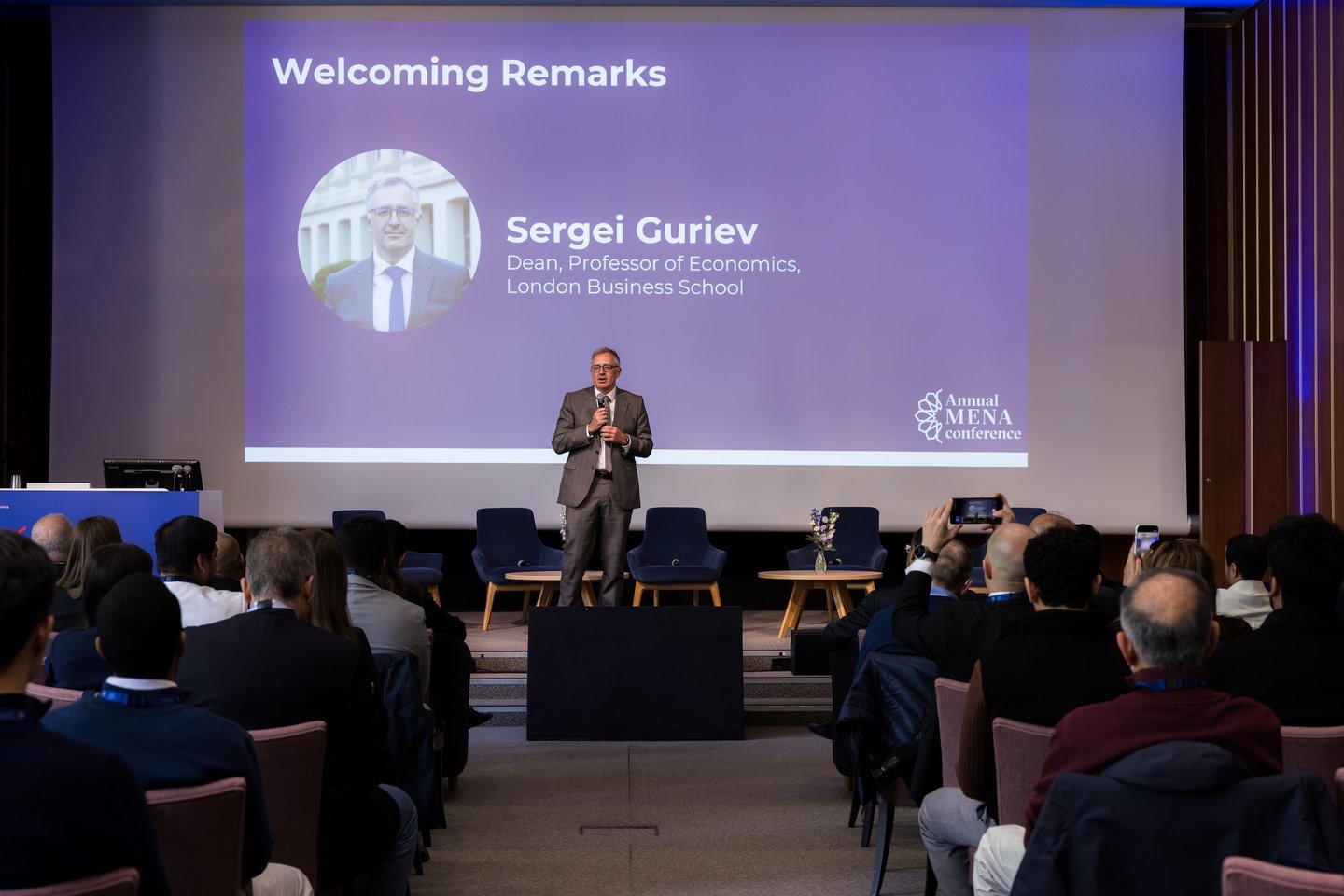
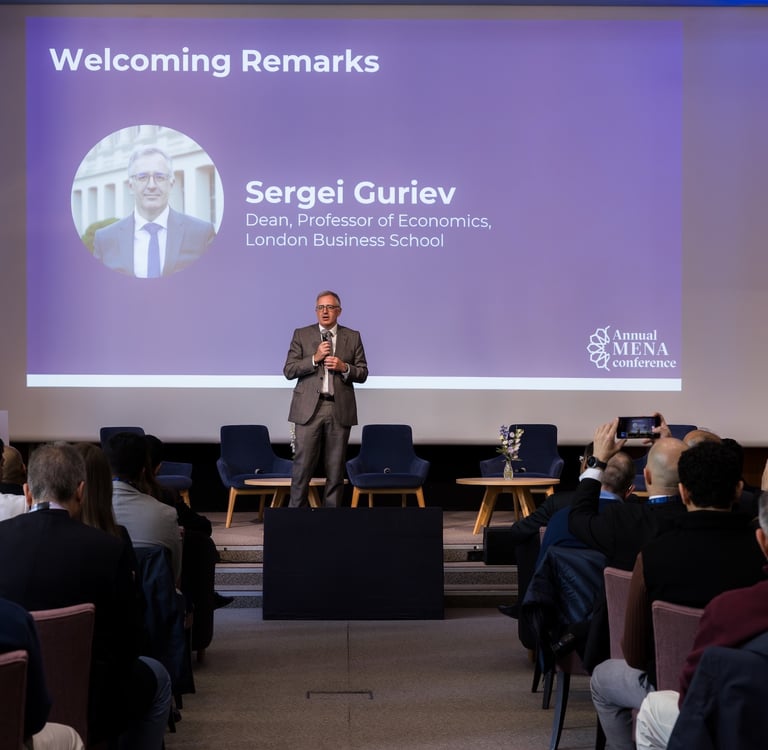
London Business School (LBS) hosted its 23rd Annual MENA Conference at the School’s London campus. The conference is a landmark gathering that continues to shape conversations around innovation, entrepreneurship, investment, and impact in the Middle East and North Africa (MENA) region. This year’s conference built on a proud legacy of insight, dialogue, and regional leadership.
For over two decades, LBS has proudly hosted the region’s foremost MENA-focused conference, uniting influential voices from across the Middle East and North Africa. This flagship event has evolved into a cornerstone for intellectual exchange, bringing together senior policymakers, business leaders, and changemakers to explore the most pressing regional and global challenges. Year after year, the LBS Annual MENA Conference draws a distinguished audience of leaders, diplomats, academics, industry experts, and students committed to shaping the region’s future.
“This year’s MENA Conference highlights how the region is positioning itself at the intersection of capital, innovation, and global economic transformation,” said Florin Vasvari, Executive Dean of Executive Education, Middle East, at London Business School. “By bringing together policymakers, investors, entrepreneurs, and academics, the conference creates an important platform for dialogue and collaboration that supports the region’s continued growth and global competitiveness.”
The conference agenda this year explored five key themes shaping the region’s economic future:
· Global Capital Flows: examining how sovereign and private capital is being redeployed and what this means for capital markets and economic development across the region.
· The Digital Economy: analysing the evolving financing landscape for the region’s technology sector and the development of stronger exit pathways and deeper capital markets.
· Climate Change: exploring how climate pressures are reshaping investments in energy, water, infrastructure, and industrial decarbonisation.
· Fintech: discussing how fintech companies are transforming financial infrastructure and expanding access to credit, liquidity, and digital financial services.
· Artificial Intelligence: examining how regional companies can build sustainable advantages in AI through talent, data, infrastructure, and capital.
The conference featured keynote conversations, fireside chats, and panel discussions with prominent leaders from across business, government, and academia.
Throughout the day, senior executives, policymakers, investors, and founders discussed topics ranging from shifting capital flows and climate resilience to fintech and artificial intelligence. Speakers from leading investment firms, technology companies, and academic institutions shared insights on the evolving digital economy, the growth of MENA’s startup ecosystem, and the capabilities needed for long-term competitiveness.
Organised by the region’s future leaders who are also current students at London Business School, the 2026 Conference was co-chaired by Abdul Aziz Al-Sibaai and Khaled Alawadhi, with support from Ghazi H. Sa’ad Eddin and Julie Assad. The broader organising committee reflects the diversity of the MENA region and represents a wide range of industries including consulting, venture capital, finance, public policy, and technology.
With a legacy of hosting presidents, royals, ministers, C-suite executives, and global thought leaders, the LBS Annual MENA Conference continues to attract a global audience of investors, policymakers, academics, and future leaders dedicated to shaping the region’s next chapter of growth and innovation.
As part of its continued commitment to the region, and alongside its longstanding campus in Dubai, London Business School opened an executive office in Riyadh last year, further strengthening its engagement with organizations and leadership in Saudi Arabia. The office enables LBS to support the Kingdom’s Vision 2030 ambitions while expanding access to world-class executive education. It also complements the momentum generated by the LBS Annual MENA Conference, creating new opportunities for collaboration, knowledge sharing, and leadership development across the UAE, Saudi Arabia and the wider MENA region.
For more information about London Business School visit www.london.edu
In today’s high-pressure business environment across the UAE and wider GCC, performance is often framed as a mindset challenge. Leaders are encouraged to think differently, act decisively, and push through uncertainty.
But neuroscience tells us a different story.
Performance doesn’t start with mindset.
It starts with the nervous system.
The concept of the Polyvagal Ladder, developed by Stephen Porges, explains how we move through three core physiological states each day:
Ventral Vagal (top): calm, connected, clear thinking
Sympathetic (middle): stressed, reactive, fight-or-flight
Dorsal Vagal (bottom): shut down, disengaged, overwhelmed
We don’t think our way into these states, we feel our way into them and from each state, our ability to lead, communicate, and make decisions shifts dramatically.
Why this matters for leaders in the GCC
Across the region, the data is clear. According to the latest Cigna Healthcare Vitality Study, 89% of people in the UAE report experiencing stress, and 99% report at least one symptom of burnout. In fast-growing economies where leaders are navigating constant change, this has direct implications for performance.
When teams operate from:
Ventral (safe & connected) → higher creativity, collaboration, and cognitive clarity
Sympathetic (stress response) → urgency, reactivity, short-term thinking
Dorsal (shutdown) → disengagement, low energy, reduced productivity
ME HR & Learning is THE leading online news and information platform for HR and L&D professionals in the Middle East.


© Copyright 2026 ME HR & Learning
The Platform
Learning & Resources
Professional Network
Location
Sharjah Media City, SHAMS, UAE