
Restoring the Human Heart of Health Insurance in the UAE
An Appeal to UAE Leadership. A Learning for Every HR Department
OPINION PIECE
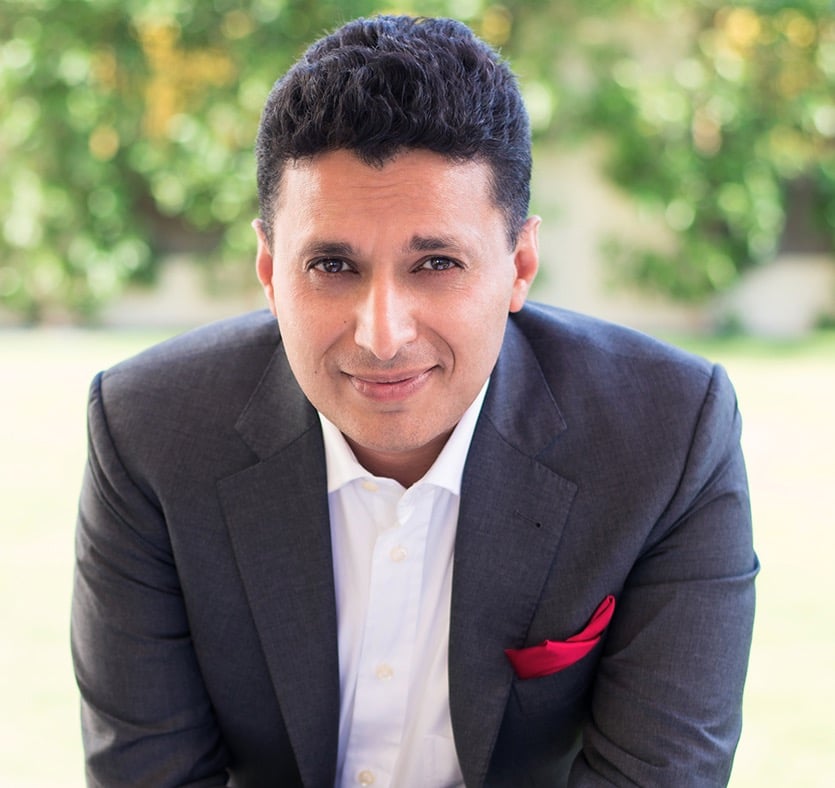
Rohit Bassi, Speak Like a W.I.S.E. CEO & Global Keynote Speaker
5/16/202617 min read
“No matter how many buildings, foundations, schools and hospitals we build, or how many bridges we raise, all these are material entities. The real spirit behind progress is the human spirit, the able man with his intellect and capabilities.”
— Sheikh Zayed bin Sultan Al Nahyan
This article carries two voices at once. The first is an appeal to the wise leadership of the United Arab Emirates, to those who shape healthcare, insurance, and public policy. The second is a learning offered to every Chief Human Resources Officer, every HR director, every Learning and Development practitioner, and every senior leader inside companies that operate on UAE soil. Both audiences share responsibility for the same outcome. Both have the standing to make the experience of health insurance more humane than it is today.
The United Arab Emirates has built a healthcare system of remarkable scale, sophistication, and ambition. Its hospitals, clinics, regulation, accreditation, and infrastructure reflect a country that has invested seriously in health, in progress, and in public confidence. This achievement belongs to the leadership, to the medical professionals who serve, and to every resident whose work, taxes, and trust support the system. It deserves recognition before any further word is spoken.
Alongside that achievement, a quieter reality is reaching the leadership through countless private conversations, family discussions, workplace exchanges, and the lived experience of residents across all seven Emirates. The insurance experience that surrounds this excellent healthcare system has become, for many people, a source of fear rather than reassurance. This appeal asks the leadership to look closely at that experience. The same appeal asks every HR function in the country to study the lessons inside it, because organisations are co-authors of how this experience unfolds for their employees.
The Principle and the Drift
Health insurance rests on humane foundations. Shared risk. Financial protection. Access to treatment. Security when life becomes medically uncertain. These principles align with the deepest values of the UAE itself. Concerns arise when the surrounding policies become too technical, too rigid, too expensive, and too distant from the human being inside the policy.
A pattern has emerged across the country, and it deserves the leadership’s attention. A patient seeks treatment. A claim is denied. A condition is classified as “pre-existing” in a way that fits the wording of a policy more neatly than the medical reality of the case. A doctor privately admits that insurers have become more inflexible. A broker who should have guided the policyholder proves ineffective. The final shock arrives when proper coverage is re-quoted at a price so extreme it stops resembling insurance at all.
Consider a representative example shared widely in everyday life. An individual had managed to secure comprehensive health insurance at around AED 8,000 per year. Even that cover was built around a modest low- to mid-tier network of hospitals and clinics, rather than around elite providers, luxury services, or premium international access. After a serious condition was flagged, one insurer quoted about AED 25,000, another AED 55,000, and a third as high as AED 100,000 for broadly similar benefits.
At that point, the numbers stop looking like risk-sharing. They start looking like exclusion by price.
It already takes serious effort for many self-funded individuals to set aside AED 8,000 a year for health insurance. Once a policy for ordinary cover at ordinary hospitals jumps into five-figure or six-figure territory, the message lands as severe. Protection remains available in theory, while drifting out of reach in practice.
This is where trust quietly bends. Insurance was designed to protect people from financial shock. The intention was for it to remain the cushion, never to become the shock itself.
The Quiet Weight of Technical Clauses
Much of the strain on the human side of insurance arrives through technical interpretation.
Pre-existing condition rules, waiting periods, exclusions, approvals, and network limitations all have a place in insurance design. The difficulty arises when a single clause, a single interpretation, or a single classification becomes the line between reassurance and financial exposure.
Industry guidance in the UAE confirms that declared pre-existing and chronic conditions may face waiting periods, exclusions, or limitations depending on the policy structure. Administratively, this appears reasonable. Humanly, it can become devastating.
For HR teams, the learning here is immediate. Many policies signed by employers contain clauses that few people inside the organisation have read in detail. Few HR functions hold a structured annual review of how those clauses translate into employee experience. The quiet drift between what a policy says, what a broker promises, and what an employee receives is often discovered only when someone in the team falls seriously ill. By then, the trust damage is already done.
A model that should spread risk begins to feel, from the inside, like a model that identifies, isolates, and reprices the people most likely to need help.
The UAE has formal complaint channels through the Dubai Health Authority and the Department of Health in Abu Dhabi for insurance disputes and claim-related grievances. The very existence of these structured escalation routes carries a message worth hearing. Denial, confusion, and dispute occur often enough to require official pathways. The leadership has the standing to ask whether the volume and pattern of those disputes deserve deeper review. HR teams have the standing to act sooner, by reading the small print, asking the awkward questions of brokers, and escalating on behalf of employees when claims fall into dispute.
Cost Has Become a Pressure Point
Conversation around premium increases in the UAE has grown louder, more emotional, and at times misleading. Reporting in early 2026 documented widespread messages claiming a blanket 18 to 25 per cent rise in health insurance premiums from January, which industry leaders publicly disputed as inaccurate. Authorities and brokers confirmed that pricing in the UAE remains individualised rather than calendar-bound.
The underlying reality carries more nuance and more honesty. Industry sources estimate medical inflation in the UAE at roughly four to eight per cent, while comprehensive plans in the deregulated segment may absorb closer to eleven to twelve per cent at renewal, particularly for older policyholders, those with chronic conditions, or those flagged as higher-risk through recent claims.
For people whose age, diagnosis, or claims profile pushes them into a higher-risk category, the actual increase can be dramatically larger than the market average. Many residents therefore experience premium inflation less as an economic statistic and more as a personal threat to future stability.
Such adjustments rarely stay abstract. They land inside real households already carrying rent, school fees, transport, food costs, debt obligations, and family responsibilities. A modest percentage on a spreadsheet can become a heavy weight on a family budget. The leadership is invited to consider what proportionate protections might exist for residents in the higher-risk categories, where the gap between market average and personal experience grows widest.
For HR professionals, the cost question carries a sharper edge. Each renewal cycle becomes a negotiation moment, and the way that negotiation is approached signals what the organisation values. A purely cost-led conversation with brokers will quietly produce narrower networks, tighter exclusions, and lower outpatient limits, all of which the employee experiences as a slow erosion of trust. A values-led conversation, supported by data on employee well-being and retention, produces a different result. HR leaders who walk into renewal meetings with employee experience as the first metric, alongside cost, end up with plans that hold their integrity for longer.
Several Realities Coexist
Several insurance realities coexist in the UAE today. Tiers of security run alongside one another, and they often track income, employer strength, and bargaining power.
At the upper end sit professionals employed by large, reputable organisations offering stronger group insurance. These plans tend to be more cost-effective because risk is pooled and the employer often absorbs some or all of the premium. Alongside that relative protection, many employees still face narrower networks, tighter exclusions, and shrinking generosity as renewal costs rise.
In the middle sit employees whose companies technically provide insurance while choosing lean, restricted, or minimum-standard schemes. On paper, these employees are insured. In practice, they may still face difficult approvals, limited provider choice, and a quiet sense that the policy exists more to satisfy compliance than to deliver meaningful protection.
Here the HR responsibility becomes unavoidable. The decision to choose a minimum-standard scheme over a more generous one is rarely an act of cruelty. It is usually an act of budget pressure, signed off in a quiet meeting between finance and HR. The consequences, though, are anything other than quiet. They travel through every team meeting where a colleague worries about a child’s diagnosis, every late-night conversation about whether to delay treatment, every resignation letter written by a high performer who has decided the country has become too uncertain to remain in.
Then come the self-employed, consultants, entrepreneurs, freelancers, dependants, and residents who discover that once they step outside the shelter of a large employer, the market becomes much harsher. Individual plans tend to be more expensive and more sensitive to age, medical history, and benefit level. Every exclusion, every loading, and every increase lands directly on personal cash flow. Every cost arrives at the household door. The individual, the family, and the bill stand alone.
The leadership has often spoken of the entrepreneur, the small business owner, and the long-term resident as central to the country’s future. This appeal asks that the insurance experience of these residents be reviewed alongside that vision.
The Labour Reality Deserves Direct Attention
Any serious appeal regarding health insurance in the UAE must include lower-income workers and the labour class. Too often, these conversations stay framed around professionals and executives, while those with the least financial flexibility are expected to manage the strictest systems.
The UAE’s Basic Health Insurance Scheme, extended across all Emirates from 1 January 2025, introduced a low-cost package priced at AED 320 per year for private sector employees and domestic workers. Industry sources confirm the AED 320 figure continues into 2026. This stands as a meaningful policy step. It deserves clear recognition as part of the leadership’s care for those who build the country with their hands.
A low-cost policy stands as a different thing from easy, dignified access to care.
The official scheme includes co-payments, defined networks, and structured pathways for treatment. Reporting and insurance guides note that under basic plans, outpatient care is often clinic-led, specialist access may depend on referral and approval, and hospital treatment outside emergencies usually requires following a process first.
For a lower-income worker, these realities can mean far more than inconvenience. They can mean lost wages, extra transport, confusion, permission chains, and delayed access to treatment. A worker with less schedule flexibility and less financial resilience experiences procedural barriers far more severely than a higher-income resident on a broader plan.
The official platform states that the basic package covers chronic diseases and pre-existing conditions without a waiting period, with access to hospitals, clinics, pharmacies, and telehealth. Alongside that protection, the lived experience still depends on network realities, co-payments, approvals, and how navigable the system feels for the person on the ground.
HR functions inside large employers of frontline staff, including hospitality, logistics, construction, retail, and domestic services, carry a particular duty here. The basic scheme provides the policy. The organisation provides the lived experience around it. Help with paperwork, time off for clinic visits, translation support, transport to facilities, and a clear escalation route inside the company often make the difference between a worker who feels protected and a worker who quietly carries an untreated condition.
“On Zayed Humanitarian Day, we reflect on the enduring legacy of the late Sheikh Zayed bin Sultan Al Nahyan, whose values of compassion, resilience, and care for people guide our nation, especially in challenging times.”
— President Sheikh Mohamed bin Zayed Al Nahyan
This appeal rests on the same values invoked by the President himself. Compassion. Resilience. Care for people. These three principles deserve to be visible in every part of the insurance experience, and especially for those with the least power to advocate for themselves.
A Question of Trust
In private conversations, waiting rooms, workplaces, and family chats across the UAE, a quieter concern is growing.
Many residents feel that every shock to society, whether a pandemic, a major weather event, or a broader rise in claims, is processed by insurers as a pricing problem before it is treated as a human problem. They fear the central question has quietly become how to protect margin, reduce payout exposure, and classify risk more aggressively.
The fairness of this perception in every individual case is one part of the matter. The deeper concern is what happens when a wide number of people begin to believe the system is designed first to protect balance sheets and only second to protect lives. Trust then weakens. Insurance ceases to feel like a safety net. It begins to look like a sophisticated financial structure built around human vulnerability.
International analysis offers context here. The American College of Physicians has warned that the profit motive in medicine can contribute to a bloated and fragmented system, and has argued that financial considerations must remain secondary to patient care. Wider research has likewise found that restrictive insurance structures and corporate incentives can weaken affordability, access, and public trust.
This appeal invites the leadership to consider what tools, audits, or independent reviews might restore confidence that the people inside the policy remain at the centre of every renewal, every claim decision, and every premium calculation.
Imported Systems and the Lesson Inside Them
The UAE has wisely drawn on international experience to build its healthcare and regulatory environment. Over the past decade, the country has cooperated with institutions across the United Kingdom, North America, Europe, and Asia on clinical governance, hospital management, accreditation, and quality improvement. This openness has helped lift standards across the sector.
A familiar pattern lives inside this openness, one that connects directly to the insurance experience and to the work of every HR function in the country. When systems are imported from one context into another, the technical scaffolding usually travels well. The cultural and structural conditions that made those systems work in their original context rarely travel with them.
Consider the National Health Service in the United Kingdom. It carries deep public funding, universal access, and a societal contract built over generations. Many of its administrative protocols, referral chains, approval procedures, and clinical pathways were designed to ration resource and standardise practice within that publicly funded environment. Those same procedural habits, when transplanted into a fast-moving, highly commercial, insurance-driven market, behave differently. Residents face more forms, more approvals, more referral chains, and more reasons for a treatment pathway to slow down, without the underlying public safety net that softens those frictions in the original context. Recent NHS reporting also documents wider system strain, workforce burnout, and professional departures linked to administrative overload, which makes the question of careful adaptation sharper still.
The lesson sits at two levels.
For the leadership of the UAE, the question is whether a structured review of imported administrative practices might be timely, distinguishing between the protocols that protect patient safety and the protocols that merely slow patient access. The country has earned the right to keep what works and refine what no longer fits.
For HR and Learning and Development functions, the same lesson lives inside every organisation. Companies regularly import wellness frameworks, benefit structures, leadership models, performance systems, and engagement tools from headquarters in London, New York, or Singapore. When these arrive without local adaptation, they create the same kind of friction inside organisations that imported clinical procedures create inside the healthcare system. People experience the structure without the cultural fit, the form without the function, the policy without the protection. The discipline of asking “what does this look like in the lived experience of a UAE-based employee” is the same discipline that the healthcare system is being asked to apply to its imported procedures.
In both cases, the call is the same. Adapt the system to the human, rather than asking the human to adapt to a system designed somewhere else.
Work, Well-Being, and the National Cost
The instability created by the insurance experience stays inside no insurance file. It spills into every other part of life and every other line of the organisational ledger.
It shapes whether people seek treatment early or delay it. It shapes whether they can focus at work while carrying the fear of denied claims, rising renewals, or out-of-pocket emergencies. It shapes job mobility, entrepreneurial risk-taking, family planning, and the long-term confidence needed to build a stable life in the UAE.
A 2024 Bupa Global Return on Wellbeing Investment survey found that 94 per cent of senior leaders in the UAE report wellbeing programmes positively impact productivity and performance, and 88 per cent of UAE companies planned to increase wellbeing investment in the year ahead. Aon’s 2026 Human Capital Trends survey indicates that 71 per cent of UAE employees feel confident in their organisation’s wellbeing strategy, leaving real room for the remaining workforce to be reached. Having a policy on paper continues to differ from feeling protected by it.
For HR and Learning and Development functions, the implication is direct. Well-being strategy and insurance strategy are the same strategy. An organisation that invests heavily in mental health apps, mindfulness sessions, and resilience workshops, while signing off on an insurance scheme that quietly denies claims and shrinks networks, has built a contradiction into the heart of its people promise. The first investment is performative. The second is operational. The second is what employees actually experience when life becomes hard.
For organisations, the cost surfaces as distraction, absenteeism, lower morale, disengagement, and a quieter erosion of trust. For the individual, it appears as chronic background anxiety. For the country, it accumulates as a slow drag on productivity, innovation, and long-term residency. Every CHRO carries a piece of this picture inside their own engagement data, exit interviews, and attrition costs, even when those costs are rarely traced back to the insurance experience that helped produce them.
Health insecurity carries more than medical weight. It is also a financial well-being matter, a performance matter, a learning matter, and a social stability matter. It deserves to be treated as all of these together.
The Quiet Power Inside Every Organisation
Inside every UAE company sits a function that has more influence over the insurance experience of residents than the function often realises. That function is HR.
Every year, HR teams sit across from brokers and insurers. They review schemes, negotiate premiums, sign renewal documents, and select the network tier their workforce will live inside for the next twelve months. Those quiet decisions, multiplied across thousands of organisations, shape the lived reality of insurance in the country at least as much as regulation does.
A few practices, applied with intention, raise that influence into something the workforce can feel.
The first is reading the policy in detail and asking brokers to walk through the exclusions, sub-limits, waiting periods, and pre-existing condition clauses in plain language. The discipline of refusing to accept summaries alone changes the conversation in the room.
The second is benchmarking the experience, in addition to the premium. Tracking claim approval rates, claim turnaround times, employee complaints, and out-of-pocket exposure gives HR a credible basis for the next renewal conversation. Many insurers will share this data when asked.
The third is structured advocacy. When an employee faces a denied claim or a punitive renewal, the presence of a senior HR voice in the conversation with the insurer changes the outcome more often than employees realise. This is part of the organisational duty of care, and it travels far beyond what any benefits brochure can communicate.
The fourth is building health literacy across the workforce, through Learning and Development. Most employees in the UAE have never been taught how to read a health insurance policy, how to challenge a denial, how to use the DHA or DoH complaint channels, or how to plan around chronic conditions. Twenty minutes inside a manager development programme on this topic returns more value to the workforce than many longer modules on softer themes.
The fifth is the boardroom conversation. HR leaders who bring the human cost of insurance into strategy sessions, alongside the line on the finance summary, give senior leadership the full picture. That picture is what allows boards to make decisions that hold over time.
None of these practices require permission from the regulator. All of them sit inside the gift of any organisation that chooses to take its duty of care seriously.
A Regional Moment That Asks for Leadership
The region today operates against a backdrop of conflict, uncertainty, and watchful eyes. People across the world look at the Gulf, and at the UAE in particular, as a model of how a modern, multicultural society can be built with intention, dignity, and care.
This is a moment when the UAE holds an unusual opportunity. The way residents are treated in their most vulnerable medical moments will be observed, discussed, and remembered far beyond the country’s borders. Talent considering where to build a future, families weighing where to remain for the long term, and investors evaluating where to commit capital all read these signals carefully.
A health insurance environment that feels proportionate, dignified, and humane becomes a quiet form of soft power. It becomes a reason for the world’s most capable people to choose the UAE, stay in the UAE, and speak well of the UAE. The reverse also holds. A system that quietly squeezes the most vulnerable, even unintentionally, will eventually be felt and remembered.
Getting this right aligns the country with its founding values and with the kind of long-term competitive edge that no infrastructure project alone can deliver. At a time when other parts of the region remain absorbed in instability, the UAE has a rare chance to lead by humanising one of the most sensitive systems in any modern society. Such leadership becomes an attraction in itself, drawing those who wish to live, work, and raise families in a place that honours them. Every HR function inside the country becomes, in that sense, a co-author of the national reputation.
What This Appeal Asks of the UAE Leadership
In the spirit of constructive dialogue, this appeal respectfully invites the leadership to consider several areas of review.
A fresh examination of how pre-existing condition classifications are interpreted in practice, with attention to the gap between policy wording and medical reality.
Proportionate protections for residents whose age, diagnosis, or claims profile carries them into the higher-risk pricing categories, where premium inflation becomes a personal threat rather than a manageable adjustment.
Stronger accountability frameworks for brokers and insurers in their duty of care to policyholders, especially the self-funded, the self-employed, and dependants outside large group schemes.
Greater transparency around claim denial trends and appeal outcomes, so that the volume of structured complaints inside DHA and DoH channels translates into systemic refinement.
A UAE-specific review of administrative load in healthcare and insurance, distinguishing between processes that protect patients and processes that quietly slow access to care.
Continued strengthening of the Basic Health Insurance Scheme, with attention to the lived navigability of the system for the country’s lower-income workers and domestic staff, far beyond the headline price of the policy.
What This Appeal Asks of Every HR Function
To every CHRO, HR director, L&D leader, and senior leader inside a UAE-based organisation, this appeal carries a parallel set of invitations.
Treat the annual insurance renewal as a strategic decision, with employee experience metrics seated alongside cost in the room.
Read the policy carefully, line by line, and require brokers to translate exclusions and waiting periods into plain language before signing.
Track claim approval rates, dispute volumes, and employee complaints as a standing part of the people analytics dashboard, with the same seriousness applied to engagement or attrition.
Stand alongside employees when claims fall into dispute, using the seniority of the HR function as a real form of advocacy.
Build health literacy and insurance literacy into Learning and Development, so that every manager understands how to support a team member through a medical event with dignity.
Reconsider any organisational habit of importing wellness, benefits, or HR frameworks from other markets without local adaptation, since the same logic that strains imported clinical procedures strains imported people procedures.
Bring the human cost of insurance into the boardroom, alongside the financial line, so leadership decisions reflect the full picture.
The Standard That Matters
The UAE has invested deeply in healthcare, and that investment deserves respect. The question reaching the leadership now is whether the insurance experience around that healthcare system still feels proportionate, dignified, and humane for the residents expected to rely on it. The same question reaches every organisation operating inside the country, because organisations stand inside the same system, shaping it from the inside.
That question matters for labourers on basic referral-based plans. It matters for employees inside lean corporate schemes. It matters for self-funded individuals facing impossible premiums. It matters for families worrying about age, illness, and future insurability.
Most of all, it matters because the founding spirit of this country has always placed human dignity at the centre of progress.
“On World Health Day, we renew our commitment to strengthening healthcare systems and preserving the wellbeing and dignity of people in the UAE and around the world.”
— President Sheikh Mohamed bin Zayed Al Nahyan
That is the standard by which this issue is offered for review.
The deeper question goes beyond whether the UAE has good hospitals. It does. The deeper question goes beyond whether insurance is necessary. It is. The deeper question asks whether the cost, design, and interpretation of health insurance still feel proportionate, dignified, and humane for the people expected to rely on it.
When residents across many income levels feel that one clause, one diagnosis, one broker failure, one referral bottleneck, or one renewal cycle can tip them from security into fear, the human side of the system is calling for the leadership’s attention. The same call reaches every organisation that signs a renewal document on behalf of its people.
Medicine should retain its human purpose. Insurance should remain a shield against financial destruction, alongside the medicine it accompanies. Organisations should remain the trusted intermediary between the system and the worker, rather than a silent partner in the worker’s exposure.
This appeal is offered with respect, and with confidence in the leadership of the United Arab Emirates and in the maturity of the HR profession across the country. The country has done extraordinary things by listening to its people. The hope behind this appeal is that, once again, such listening leads to refinement, to humanity, and to the kind of progress that honours both the founding vision and the lives quietly carrying the country forward each day.
Rohit’s profile
ME HR & Learning is THE leading online news and information platform for HR and L&D professionals in the Middle East.


© Copyright 2026 ME HR & Learning
The Platform
Learning & Resources
Professional Network
Location
Sharjah Media City, SHAMS, UAE