Peter Kinahan on Generative AI's Impact on Education
Explore Peter Kinahan's insights on generative AI and its profound effects on the education sector. Discover how this technology is reshaping learning experiences and teaching methodologies.
OPINION PIECE
Peter Kinahan
1/26/20263 min read
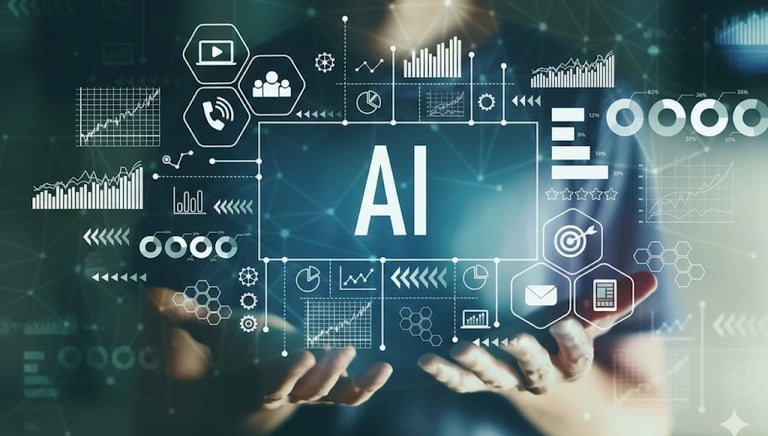
For educators contemplating the learning environment in 2026, nothing can compete for attention with the rise and potential of generative AI.
This new and rapidly expanding toolset may be relatively new, but the same challenge remains: how to design learning at scale that reliably builds understanding, strengthens memory, and develops expert judgment. In this respect, cognitive science is unequivocal — the way people learn has not fundamentally changed.
Effective learning still depends on three critical factors. Learners must first understand, forming accurate mental models that allow them to make sense of complex information. They must then remember, strengthening retrieval over time, so knowledge remains accessible in real-world contexts. Finally, they must become experts, developing judgment through repeated application, feedback, and experience in realistic situations. These cognitive requirements are invariant; no technology will bypass them.
That said, artificial Intelligence and particularly GenAI and Agentic AI, are working as a catalyst to change work and working that in turn fundamentally influences how work gets done and is organised. This radically changes the nature of learning itself and what people need to learn.
Against this background, we can make a number of observations and predictions.
Every organization is facing a skills crunch. Client needs are directing the professional development industry from ‘stop and learn’ human-led/content-centric courses to a different ‘always-on’ AI-led/enabled teaching and learning model that promises or at least hopes to be skill-centric.
At the same time, today’s training methods are not delivering on the skills front, particularly human skills like creative thinking, problem solving, collaboration, etc. Only about 35% of employers provide human skills development opportunities to their people, often because of a lack of trainers and equally because of a lack of an environment that encourages skill practice and vulnerability.
Learning will take place within the flow of work, relating learning to the skills required in workflow, optimizing learner engagement and bringing demonstrative and timely results to learners’ work cycles.
Any new learning model must be scalable, fast, context-rich and aligned to organizations’ culture, strategies and goals. The half-life of skills is decreasing rapidly.
That new model will be AI-first or AI-native: delivery, which will fundamentally change the nature and efficacy of the learning experience, particularly in the skills development arena.
In 2026, Intuition will be rolling out a new AI-powered model where AI acts as an amplifier—enabling better diagnostic assessment, more adaptive learning paths and richer practice through tutoring, coaching, and simulation— but without altering the underlying cognitive constraints of learning itself.
The assessment phase will move beyond traditional testing by using AI-enabled diagnostic approaches, including simulations and cognitive diagnostic models, to generate fine-grained profiles of learner strengths and gaps rather than single scores. This approach can significantly reduce assessment time while improving accuracy and can directly inform faster individual development and organizational skills intelligence.
Diagnostic insight from the assessment phase routes the learner into targeted, time-efficient learning journeys. AI dynamically matches identified gaps to sequenced learning experiences—such as explanations, worked examples, simulations, tutoring, and coaching—tailored to the learner’s needs, context, and business priorities. This enables shorter, more relevant learning paths that emphasize understanding, reflection, and readiness for application.
The AI-enabled practice phase embeds learning in realistic, low-risk environments that mirror real work. Through role plays, scenarios, and tool-based exercises supported by immediate, diagnostic feedback, learners can apply knowledge, refine judgment, and accelerate skill transfer.
AI is not without its challenges, and several failures of AI in learning have already been called out by academic research. When AI is used inappropriately, or in the wrong context, human thinking, reasoning and long-term learning may diminish. Used incorrectly, AI can reduce cognitive effort, self-regulation and thus deep learning. Our challenge, working with our clients, is to deliver a solid learning methodology that capitalizes on AI’s many benefits while ensuring that learners retain and improve their ability to think critically and solve problems.
ME HR & Learning is THE leading online news and information platform for HR and L&D professionals in the Middle East.
Location
Sharjah Media City SHAMS, United Arab Emirates
Contact
Phone: +971505959268
Mail Us : info@me-hrl.com
Copyright 2026 ME HR & Learning