
 EN
EN AR
AR HI
HI ES
ES FR
FR DE
DE


What Global Payroll Providers Get Wrong About the Middle East
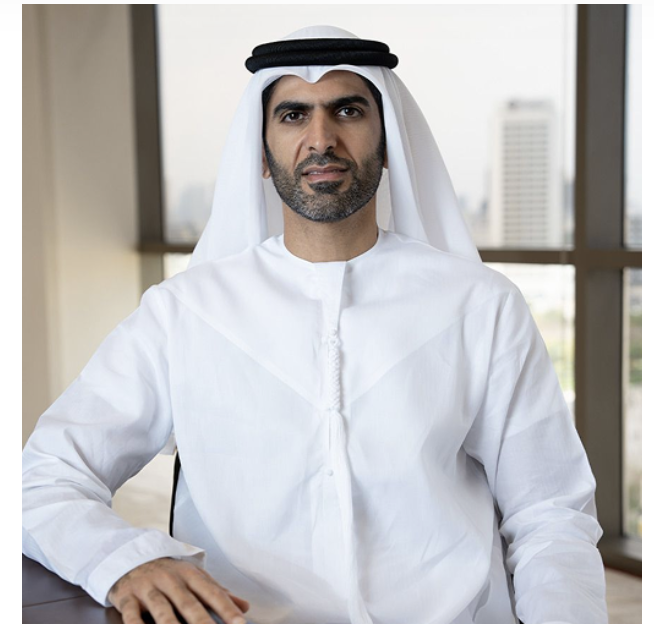
Akeed Azmi, CEO and co-founder of Cercli, warns of compliance gaps and frustrated teams and systems as a result.
The Middle East is, by global comparatives, thriving economically. With World Bank forecasts of 3.9% GDP growth for MENA in 2026, the region compares favourably to OECD estimates for the Eurozone (1.0%); the US (1.5%) and the G20 (2.9%).
Global consultancies echo this optimism. EY cites the GCC’s “sound infrastructure and economic growth” while PwC praises the contribution from non-oil sectors, describing them as “increasingly dynamic, resilient, supported by investment and expanding trade ties.”
These strong foundations and economic diversification have led to increasingly inbound Foreign Direct Investment, with the rest of the world keen for a seat at the table to access the region’s organic and home-grown expansion.
Yet, attempts by international corporates to access a high-growth geographic region such as the Middle East, often use the same business development plans and operations methodologies as they do in other markets. These can be inherently flawed. They fail to appreciate cultural nuances and individual regulatory environments, and get technical fundamentals wrong. Such flaws are very evident in the $100 billion global payroll sector – where one size definitely does not fit all.
We have seen repeat patterns in payroll and compliance across the GCC, Egypt and Lebanon. Global providers treat MENA as just another region to tick off their list. The result? Compliance gaps, frustrated teams and systems which create more work than they solve.
Take WPS (Wage Protection System). Many global providers treat it as another payment method. In reality, it is a government mandated system with zero room for error. In the UAE, Saudi Arabia and Qatar, employers must pay salaries via approved financial institutions and submit electronic payroll data in specific formats by strict deadlines. Non-compliance can lead to fines, visa blocks or even business suspension. I have seen companies blocked from processing visas for months because of WPS formatting errors.
End-of-service benefits are similar; calculated differently according to tenure, contract type, basic/full salary and termination reason. The UAE has complexities with voluntary saving schemes for mainland and freezone companies, while the DIFC has the separate DEWS system. Rules are different according to the regulatory authority the entity falls under. Nationalization programs such as Saudization and Emiratization have specific quotas with real consequences.
Global players also ignore cultural and operational realities – even basics such as the workweek. Most of the region works Sunday to Thursday, save for the UAE where Dubai and Abu Dhabi are Monday to Friday. The government sector has a half-day on Friday, while Sharjah still operates Sunday to Thursday. Something so simple, yet very region-specific.
Payslips are provided in English when government portals require official documents in Arabic. Other aspects typical to the region are HR letters like Non-Objection Certificates for employees travelling and Salary Certificates for bank loans or visa applications. These are part of everyday workflow that global platforms often don't support.
I have seen global providers ignore realities such as the workforce being heavily expat-dominated - with different allowance structures. Housing, education, and travel allowances all need proper documentation and calculation. Other companies provide loans for education or housing or give employees the flexibility to apply for company loans and pay them back in instalments. These are standard practices here.Technical errors by global players are also common, as data sovereignty becomes a bigger deal. Local regulations must be followed when storing and transferring employee data. Data cannot just be stored where it happens to be convenient for a service provider’s global infrastructure.
Currency management is another blind spot. Even when paying in AED, SAR, QAR, USD or EUR, proper multi-currency support is required for expats who might request payment in their home currencies, and where exchange rate fluctuations matter. As for employee misclassification - getting the contractor / employee distinction wrong can lead to back pay, fines and legal disputes that nobody wants.
The real issue is that global providers think MENA is complicated, so they try to simplify it. But you cannot simplify your way out of regional complexities. You have to build for it. MENA is a mosaic of different legal systems, cultural practices, regulatory requirements and workforce demographics. What works in the UAE doesn't work in Egypt. What works in Saudi Arabia doesn't work in Lebanon.
Deep, in-country expertise is required with systems built to handle actual workflows, rather than obligating local teams to work around the limitations of a global provider’s platform. When payroll runs smoothly in markets where banking is fragmented and delays can be common, it becomes a signal of employer reliability.
For remote teams and Employer of Record (EOR) employees across the region, consistent payroll is critical to retention. The payroll providers who get MENA right – such as Cercli - are the ones who stop trying to adapt a global template and build for the region's reality from the ground up.
Akeed Azmi is CEO and co-founder of Cercli – the modern platform for enterprises to hire, manage and pay their global workforces in the age of AI.
Related Posts
First Homegrown Fintech Company Launched by Huru in the UAE
Huru is a homegrown UAE fintech company licensed by the Central Bank of the UAE. Founded in 2022, Hu...

Amazon Payment Services Appoints Managing Director, Pablo Londono
Amazon Payment Services, a regional leader in digital payments operating across nine countries, toda...

Corporate Tax Relief for Small Businesses
The Ministry of Finance (MoF) has issued Ministerial Decision No. 73 of 2023 on Small Business Relie...

AED 500 Million Allocated to SME Global Expansion in Line With D33 Agenda
H.H. Sheikh Hamdan bin Mohammed bin Rashid Al Maktoum, Crown Prince of Dubai and Chairman of Dubai E...


Government Salaries Paid in time for EID Holidays
Under the directives of His Highness Sheikh Mohammed bin Rashid Al Maktoum, Vice President, Prime Mi...

How to Calculate your End-of-Service Gratuity
The General Pension and Social Security Authority (GPSSA) explained ways by which insured individual...

Whish Money Launches Cardless Checkout on Shopify
Whish Money SAL, a leading fintech company is proud to announce the launch of Whish Pay on Shopify, ...

Myriad Ways to Enhance Profitability
Like they say, there’s more than one way to skin a cat. I’ve never understood why one would ...

Financial Recovery Success from Nafis Beneficiaries
The Ministry of Human Resources and Emiratisation (MoHRE) announced that it had recovered more than ...
